The most interesting shelves rarely arrive fully formed. They hold books that have been read, objects brought home slowly, and practical things that happen to be beautiful. Arranging them is less about achieving a formula than helping the pieces you already value sit comfortably together.
Take everything off, briefly
An empty shelf makes its proportions easier to see. Remove the objects, clean the surface, and look at the space before putting anything back. Consider what the shelf is for. Is it primarily a library, a place for everyday dishes, or a display near the entrance? Its purpose should determine how much free space you leave and how accessible the contents need to be. Check the shelf's load rating and fixings before returning heavy objects. An attractive arrangement is only successful when the underlying storage is appropriate for what it holds.
Let books be books
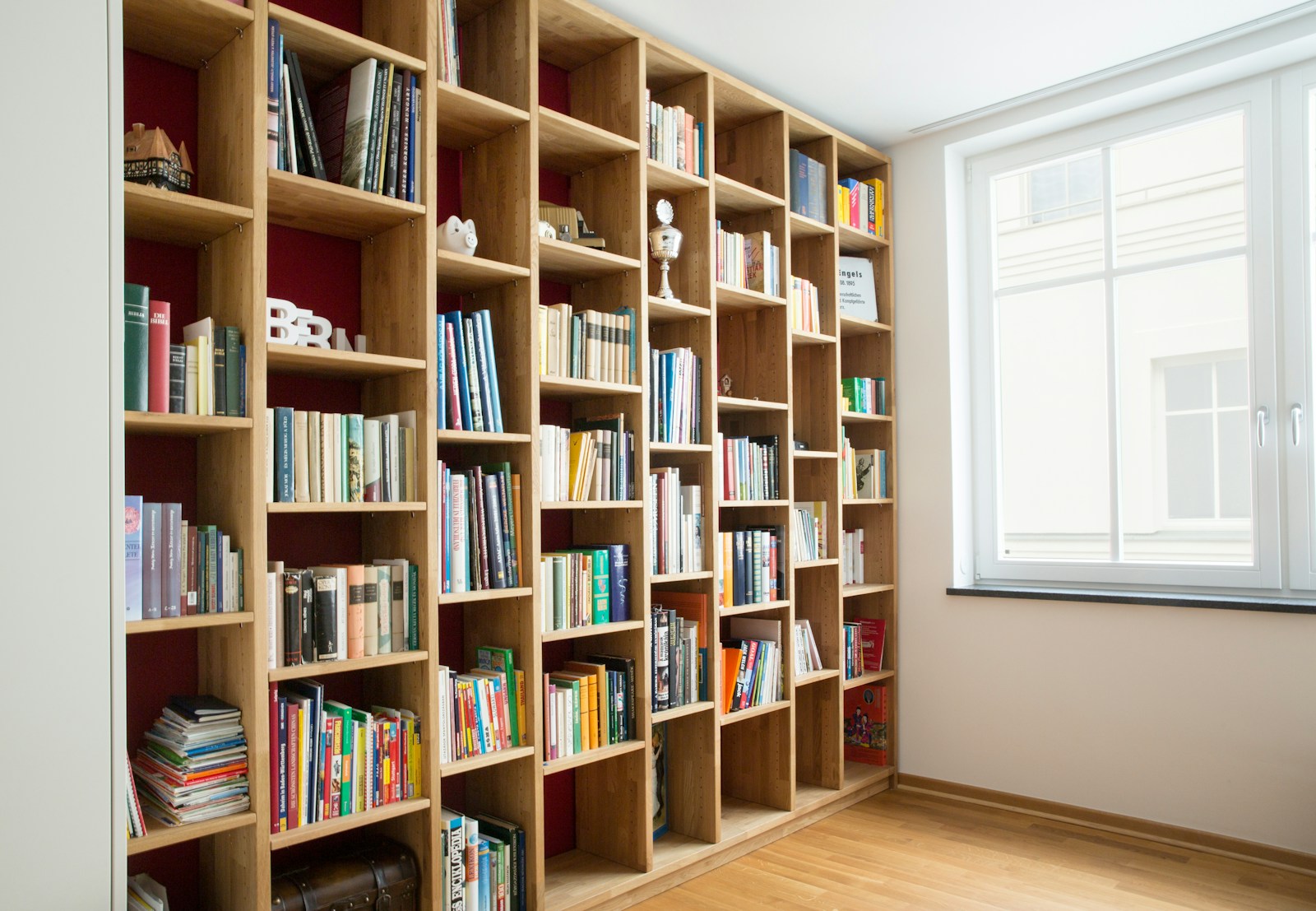
Organize books in a way that helps you find them. That might mean subject, author, or simply the order in which you reach for them. Turning every spine inward sacrifices usefulness for a uniform look. Instead, accept the variety of colors and work around it. A short horizontal stack can support a lightweight object, while a vertical group gives the eye another rhythm. Avoid stacks so tall that retrieving the bottom book becomes a project. If the shelves are full, a genuinely useful library does not need decorative gaps to justify itself.
Choose objects with a reason to stay
Bring back the pieces that mean something to you or serve a practical purpose. A bowl used for keys, a small painting, or a jug inherited from a relative has more staying power than an object bought solely to fill a gap. Different materials help: glass catches light, ceramic absorbs it, and wood adds warmth. There is no need to represent every material on every shelf. Start with a few pieces and let their shapes suggest the arrangement. Put delicate or valuable items where they are unlikely to be knocked during daily use.
Arrange in loose conversations
Rather than spacing everything equally, make a few small groups with breathing room between them. A tall object beside a lower stack creates a useful contrast in height. An artwork leaned against the back can give depth, provided it sits securely. Step away and view the shelf from the place you normally see it: the sofa, the doorway, or the dining chair. A close-up arrangement can look busy from across the room. Move one object at a time, and stop before the process turns into a hunt for mathematical perfection.
Keep room for change
A shelf should be able to absorb a new book or a small discovery without requiring a complete redesign. Leave a little flexibility, and rotate objects only when you feel like seeing something different. Dusting offers a natural chance to reconsider what remains useful or meaningful. If a piece repeatedly feels out of place, try it elsewhere or put it away for a while. The aim is not to display every possession at once. It is to make a small, readable portrait of life in the room, with enough space for the next chapter to arrive.
Thoughtful spaces. Everyday rituals.
A home that feels like you.